Land possession, putting it into practice.
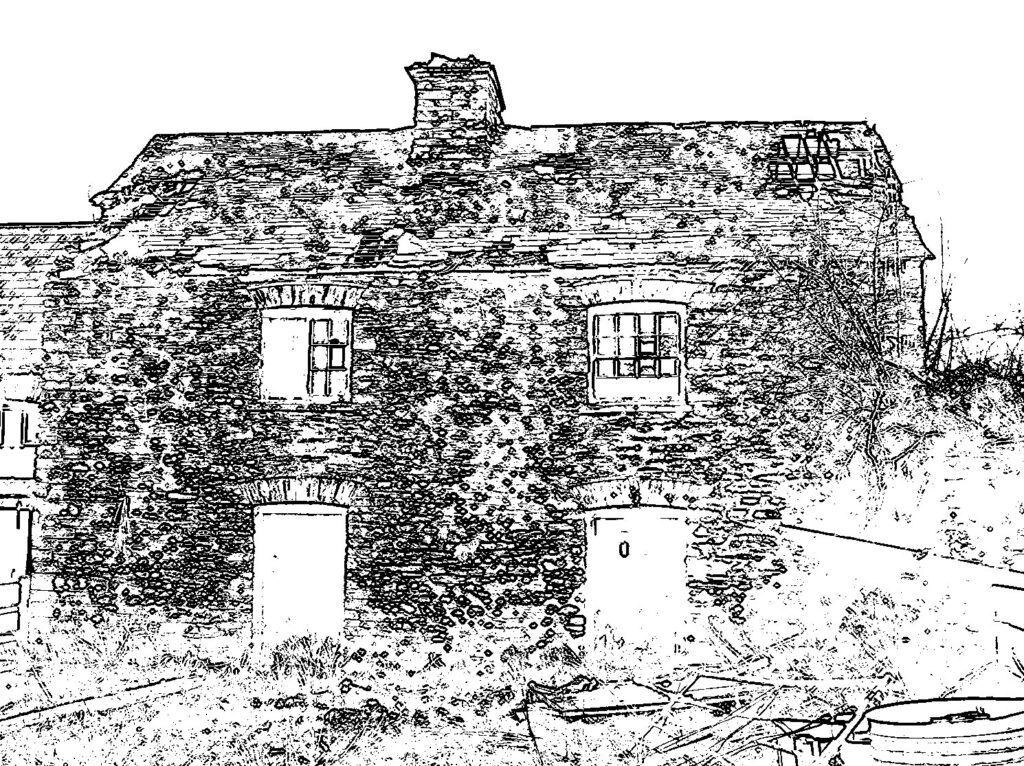
If it’s just the corner of your field then you can probably just fence and maintain it. But most property, and particularly any that has potential value will often have someone keeping a bit of an eye on it. I suggest that some properties remain untouched simply because of their close proximity to other properties which means it would be very difficult to do anything there without the critical gaze of neighbours etc.
You need to physically take over the property.
The land registry has some clear and really quite simple rules. Unless you follow these, and this does mean all of them, you may be completely wasting your time. You can find numerous sites that list these rules in detail, including that Land Registry’s own practice guides, so I will only give a simple overview here.
You must act in such a way as to dispossess the actual owner
Your actions must be clear and unambiguous
You must treat the property as if you were the actual owner.
You need to provide yourself with clear evidence that you are doing all of this. Do this before you land, from the moment you take possession, and continue to do this until you get the document that tells you it’s now yours. Keep a written record with dates of whatever you do, and photo’s and video’s of everything.
And finally, you need to do all of the above, and then keep on doing it for the requisite 12 years before you can even put in your application(10 years if its registered land) And even then the Land registry could turn down your application for what appears to be some obscure reason.
A word of caution
There will be many cases where the only way to truly find out if a property is abandoned and up for grabs is to actually land on it, take possession, and then wait to see if someone comes out of the woodwork with some form of claim on the property.
And the only way to do this ….is to do it!!
But, and here is where a caution comes in
There may be a legitimate owner, or
There may be someone who believe they are a legitimate owner.
As I state all along, if someone turns up with a full set of deeds, and clear evidence they own the property, then you go. You have no grounds to stay. You also need to make it very clear from the start that this is exactly what you will do.
So there is no need for anyone to get hostile, aggressive, abusive etc. They may get mad, but as soon as they know how to get you off, they will head off to their solicitors, get the papers, and tell you to clear off.
Simple really
But what happens when the ownership is less clear
That’s when you run the risk of people getting very cross. And you’re in their sights. You are the perceived problem.
There is a very real risk of hostility, abuse, verbal, and possibly physical. People will want to do whatever they can to get you away, and if they can achieve this by intimidation, then that’s what you will get.
You may well be challenged with any number of questions/statements
Who told you you could do this
What gives you the right to do this
Who do you think you are
How dare you do this
This is stealing, you’re a thief.
What kind of person would do such a thing
I’m going to my solicitor, and this is going to cost you..
My mother/brother/aunt is very upset. This is your fault.
There is only one way to respond to any questions like these DON’T
These are not discussions or arguments you need to be getting into. This is where the classic broken record approach is the only option. “Please read the handout, it tells you everything you need to know”
And just repeat this, for as long as necessary.
I have also prepared a handout for anyone entering the land, claiming it the be theirs, and wanting to throw you off. This also includes clear advice to get good legal advice. There is the strong implication that any action need serious consideration, and the support of the law before people take any action. Do anything to make people pause before they get tractors and chains. I doesn’t matter if these get torn up and thrown away, the message needs to get across, even if just a small part of it is seen.
Be assertive and confident in your manner. The people you are dealing with need to learn very quickly that you won’t simply back down and walk away if they shout a bit. The majority of people have very little experience of actual conflict and so have no idea how to manage this. Most will strut around and get noisy, but very few will attempt to take further action, particularly in the face of a confident opponent.
You need to be prepared for that, able to cope with it, and deal with it. One possible way will be to ensure that you have company on the property when you first arrive, even if only for the first few days. You may need to be able to cope with people getting into your face, and then standing your ground.
Of course part of your protection will be CCTV, Go-pro’s, voice recorders and anything you can use to both gather evidence, and discourage bad behaviour. Most people will back off if they know there will be very negative consequences. Don’t stint on these, you will need them.
And it will probably be useful if you have learned some de-escalation techniques. Ways to wind a situation down, remain in control, and most importantly, not respond to any overt provocation. This is a skill that most people don’t actually have, so either find someone who can be on site who has those skills, learn them yourself, or choose another path.
So what does this mean in practice
You must act in such a way as to dispossess the actual owner
You need to secure the property in some way, ideally in a way that clearly shows that there has been a change in the overall situation. Putting up, or replacing fencing or gates will always be a good start. You will never be able to secure a site against people getting in somewhere, nor should you attempt to, but you do need it to be clear that you are in effective control of the site. The other simple principle is that you act in a way that you can carry out activities on the site, but the dispossessed owner is actually prevented from doing so by your actions. You will find that this is one of the major failure points where applications are being made. You must be exercising clear control, not just some ambiguous kind of use.
Your actions must be clear and unambiguous.
No hiding here. What you do needs to be in clear sight. That said, the act of taking over and securing a property needs to be a fait accompli. You need to be on there, and fully secure before other people get any idea of what you are doing. Popping over, clearing an access one day, turning up next week doing a bit more clearing is simply alerting anyone else of your intentions. Someone with greater resources could then simply choose to get in there first. And landowners and farmers usually have lots of resources.
You must treat the property as if you were the actual owner.
This should be straightforward. If you’re taking over any kind of property, logically, you’re in for the long haul. And there must be a reason why you want the property in the first place. So just imagine you own the property, what would you actually do? The only thing I would caution is doing anything which involves any major expenditure. Whatever you do Ideally needs to be portable, easy to reverse, and more importantly, remove if the need arises.
And this is entirely possible. You can cultivate the land, plant things, even create basic infrastructure without making a major investment.
You need to provide yourself with good evidence that you are doing all of this.
We have the wonder of technology available now. We can even monitor any location remotely using camera’s and the internet. We can take a lot of photos, video’s etc and store these for future use. We can even make use of technology to establish an irrefutable timeline showing whatever activity we are carrying out at any location.
The camera is also our protection. Look at the way that police, security and various other people make use of go-pro’s and other forms of cameras. People’s behaviour changes quite dramatically when they are aware of being watched, and more importantly filmed and recorded.
Use as much of this as you can afford.
What you don’t do
Change the padlock on a gate. Anyone could do this
Put up “no trespassing” signs in the absence of any other activity. If you find a potential property where someone has done exactly that, you know they have read a brief answer on a property forum somewhere, and haven’t taken the time to do their homework….or read this information. Treat the property as one that is potentially available.
If you take over a property that has an existing squatter on it, they would have to prove they are in full possession of it in order to then dispossess you. There is a very good chance they won’t be able to do this unless they have very good evidence.
Another important factor is that possession has to be continuous when making a claim to the land registry. If you are able to take full possession you have effectively reset their clock back to zero. This may well be a factor in whether someone attempts to dispossess you, or not.
You will need to actually remain on the site for a while in the initial stages. Other people may believe they have a claim, and make attempts to move you, or your property, and therefore any evidence of your presence off the site. The longer you stay, and the more evidence you are able to collect the better. Making the site secure and having a good CCTV system set up is essential. Other people need to know that there are consequences of attempting to take action against you.
You will need to be quite assertive. People can get very angry if they believe you are taking something that belongs to them. You will need to be able to stand up to this. Having a small group of people on the site can make a big difference.
The only way to legally move someone off any piece of land or property is the legal route.
The police have no powers to move you on unless there is a disturbance.
2 or 3 people will always be better than 20 or 30.
Do not make any attempt to prevent people entering the land, walking around, asserting their ownership. This may be an attempt to provoke you into action that could backfire against you.
I would however suggest that you block of any access as much as possible. For instance, if you are using a caravan, use a wheelclamp, remove the road wheels, remove the actual hitch, use another vehicle to block the removal of any property. Ensure that anything that is being moved would be damaged if anyone attempted to do so. This may seem like overkill, but anything that increases the disincentive to interfere with your property will always increase the chances of you being left alone. Another factor is that the harder you make it to move you, and your stuff, the longer it will take, and the more likely you will be able to involve the police if there is any action actually being taken. And of course, all of this needs to be in place before anyone even realises that you have landed.
So for practical purposes, pick a moonlit night, work as silently as possible, use battery powered tools if you need to. I would also recommend doing things over a period of time if you can conceal your activities for the most part. For instance on one location, I managed to remove a huge amount of overgrown foliage including a fallen tree without it being obvious what I was doing. I cleared the rest away, and winched a caravan onto the site the following night. I parked away from the location, entered through an overgrown hedge and essentially remained invisible until I was in a position to reveal my activities. I would strongly suggest that you do the same.
You really do need the protection of camera’s from the outset. You can set up a couple of Trail cams, but of course these are easily damaged, or taken away. Having a link to the internet can be done, but an isolated site may have no power, signal etc, so how would you actually achieve this.
You can buy modern CCTV systems which mostly work on 12V power supplies so these could be linked to an old car battery. Camera’s can be wireless and so set up in different locations with their own battery to power them.
Another option, particularly if you use a caravan, or shed is to have a camera looking out of a window. This way, damage has to be caused to disable it…another disincentive.
There are dedicated DVR systems designed for lorries buses and taxies which can be adapted to suit. You’ll just have to work out what will suit your needs. These systems can be very costly but you will need some form of protection so it may well be worth it.
Ideally have a camera in a very visible position so it is clear that there are camera’s on site. What I believe is also important is that you are protecting the camera’s themselves, from either interference, or removal, and the best way to do this is to ensure they effectively cover each other, and by having some form of remote recording system with little chance this can be interfered with.
There is a legal requirement to provide a notice that CCTV is being used so ensure you do this. You want people to know they are being recorded. It is your main protection.
Protect yourself when dealing with other people by wearing a GoPro or similar. For most people, the perception that their behaviour is being recorded is a massive disincentive towards acting inappropriately. And the reality is that you may actually need to have genuine evidence if you do experience aggression and hostility in any form.
I also use a good quality recording device. If nothing else, it can be useful to have a record of what people say to you.
However, once you are actually established on the actual site
Be very clear what you are doing, particularly if any approach made to you is hostile in nature, i.e. someone else turns up, and claims that you are on their land.
I would always suggest that you provide a means of contacting you in some way. To be in adverse possession, you don’t need to have a big sign saying that you are. And for the most part you probably don’t need to. I will have a phone number clearly listed, and more recently have used a QR code which links to a webpage which allows anonymous contact to be made directly to me. On one site, I have used a QR code to link to a page that gives a full explanation of my activities on the site.
Print the code quite large, seal it by laminating it, then screw it to a post, or fix it somewhere. I also made a smaller version which people can pull off and take home, and have these easy to remove and take away.
If local people are curious, but will clearly buy into whatever back story you have hinted at, the last thing you need to do is to explain your actions in great detail, so unless you really have to, I suggest that you don’t. So many people fall into the trap of trying to provide way too much information. Don’t do it. Stop talking. People will often guard their privacy, and this is not even seen as unusual, so give the impression that is what you’re doing if the questions get very specific.
How much did you pay?? Sorry mate, I’m not prepared to tell you that!!
Just because you are asked, you don’t have to give the information.
You don’t need to tell people you are in adverse possession unless they are actually challenging your ownership, and claiming it as their own, or on behalf of someone else, in which case come clean and be very clear.
There will be sites where you have to do this from the outset. I would suggest that you make up signs that link up to, or show whatever information you need to be passing on and put these where they will be seen.
Be clear that if someone else can prove their ownership, that you will pack up and leave, no harm done. This way you immediately shift responsibility onto them to prove their ownership. Be very firm about this. An awful lot of even reasonable people will resort to shouting and various forms of intimidation, thinking this will work. Don’t allow it to.
You need to anticipate this.
At one location the neighbours who claimed ownership appear to have put the word out to all of their friends who would slow down with their cars and very deliberately start making videos and taking photographs of me and my activities on the site, and lots of people would also also give a long blast on the car horn as they were passing the site.
I have now been on that site for the year, and there is still an occasional blast of a horn, but very little else, I did however write a note to the neighbours who were claiming the land pointing out that every person taking photographs and video’s was another person who was effectively a witness to my possession of the property, and so what they thought was working for them and was possible intimidation of me was actually supporting my claim much more than supporting theirs. They only had one recourse which was to provide proper legal title to the property which they have never done.
I am often deliberately ambiguous when speaking to neighbours.
Very few people are interested in the actual legality of a situation. If you talk about a location as if you own it, most people will simply assume that you do. It may get complicated where people do actually know the name of a previous owner, but saying..”oh yes, Mr Blank died a couple of years ago, and it took them a while to sort out the estate” leaves a lot of implications sitting there, and most people are too polite to ask about specific information.
And yes, this will be a little disingenuous, but coming straight out and talking about how Mr So and So was your aunties neighbour in wherever, which is how you got wind that they wanted rid of that bit of land they inherited years ago…….
The majority of people will assume that specific knowledge can only be acquired through doing things properly. I.e. therefore you must be legitimate because the information clearly is, despite the fact we all know that vast amounts of information is now publicly available. People can be so naive.
I had a dismantled greenhouse stolen from a field under the direct supervision of a neighbour, a retired teacher. The scroaty scrappy just said “he told me to leave that pile over there, and don’t bother with those bits, but it’s ok to take all this aluminium” he even handed over a note with a phone number. Which didn’t work of course. Just enough credibility to diffuse any concerns. And he got clean away with it. Probably pulled the same trick dozens of times, and most times it will work.
And of course, once you’re there, doing stuff, clearing up etc, your very actions are lending legitimacy to your presence.
This is where having good historical information can actually be very useful. If you are referencing information that other people already know, they will assume legitimacy. Sorry, but this is a method used by con merchants all the time, but it does work, and can be useful.
If you speak about what your plans are for a property, and even start to gather information about its history, again most people will simply assume you are the owner.
On one property, on an isolated lane, I made a point of waving to and acknowledging every vehicle that went past. Most simply returned my wave, and carried on their way. People who are not legitimate are rarely so open in their actions. Use this to your advantage.
The majority of neighbours will be curious, some will probably be quite happy when something derelict is being improved, most will just watch and observe and make no effort at all to involve themselves in what is actually going on. I would suspect that very few would get involved, even if they think the legitimacy of a situation may be slightly suspect. People simply don’t like to stick their oar in. It’s very British.
You may always run the risk that an owner has maintained some kind of contact with a neighbour and therefore gets informed about your activities.
I always look at sales in all the surrounding properties. If there has been a high turnover of people, there is probably less chance someone has kept up contact, people simply don’t.
And the seemingly plausible back story. Well if someone has direct contact with an owner that can be blown immediately, but if not, few people will have the knowledge or resources to start checking up on things, as they easily could.
If there is a legitimate owner, I’m afraid you need to run the gauntlet of that for the full 12 years. There is no way to avoid that. I suspect this is one of the reasons that most of the land acquired by adverse possession will be bits of neighbouring land that have been abandoned. There appears to be little or no risk, and hey, you could still have had the use of the land for X years.
This is another reason I would not consider doing anything that can’t be reversed, dismantled, removed etc. If you do end up having to ship out, just pack up, take everything, and apart from the inconvenience, there shouldn’t be any major financial loss.
Some possible negative outcomes
Your property will just get removed from the site, and in some cases disappear. This is best avoided by being on site, and having good physical and electronic protection.
A landowner will turn up with genuine evidence of their title, in which case, pack up and leave immediately.
People will turn up, get aggressive and hostile. They may and will use all kinds of bullying tactics to get you to leave. You need to be prepared for this very situation, and ensure that you are skilled at managing such situations.
I believe that acquiring land is likely to be a numbers game. You may have to put this into practice any number of times before you land on somewhere you can hang onto without interference for the 12 years. However, for most people, you only need to be successful once for the whole process to be well worth it.